Showing posts with label ethical hacking. Show all posts

Friday, 19 November 2021

Skills Required to Become an Ethical Hacker

 An ethical hacker should have in-depth knowledge about all the systems, networks, program codes, security measures, etc. to perform hacking efficiently. Some of these skills include:

  • Knowledge of programming - It is required for security professionals working in the field of application security and Software Development Life Cycle (SDLC).
  • Scripting knowledge - This is required for professionals dealing with network-based attacks and host-based attacks.
  • Networking skills - This skill is important because threats mostly originate from networks. You should know about all of the devices present in the network, how they are connected, and how to identify if they are compromised.
  • Understanding of databases - Attacks are mostly targeted at databases. Knowledge of database management systems such as SQL will help you to effectively inspect operations carried out in databases.
  • Knowledge of multiple platforms like Windows, Linux, Unix, etc.
  • The ability to work with different hacking tools available in the market.
  • Knowledge of search engines and servers.

Ethical Hacking Benefits

Learning ethical hacking involves studying the mindset and techniques of black hat hackers and testers to learn how to identify and correct vulnerabilities within networks. Studying ethical hacking can be applied by security pros across industries and in a multitude of sectors. This sphere includes network defender, risk management, and quality assurance tester. However, the most obvious benefit of learning ethical hacking is its potential to inform and improve and defend corporate networks. The primary threat to any organization's security is a hacker: learning, understanding, and implementing how hackers operate can help network defenders prioritize potential risks and learn how to remediate them best. Additionally, getting ethical hacking training or certifications can benefit those who are seeking a new role in the security realm or those wanting to demonstrate skills and quality to their organization. You understood what is ethical hacking, and the various roles and responsibilities of an ethical hacker, and you must be thinking about what skills you require to become an ethical hacker. So, let's have a look at some of the ethical hacker skills.

Friday, 4 October 2019

Ethical Hacking - Wireless Hacking

A wireless network is a set of two or more devices connected with each other via radio waves within a limited space range. The devices in a wireless network have the freedom to be in motion, but be in connection with the network and share data with other devices in the network. One of the most crucial point that they are so spread is that their installation cost is very cheap and fast than the wire networks.
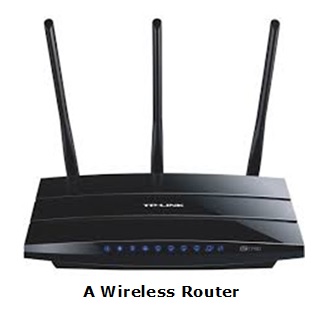
Wireless networks are widely used and it is quite easy to set them up. They use IEEE 802.11 standards. A wireless router is the most important device in a wireless network that connects the users with the Internet.
Wireless Router
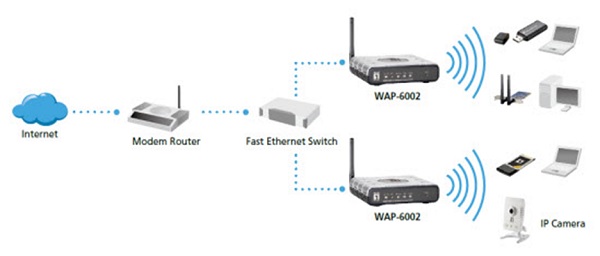
In a wireless network, we have Access Points which are extensions of wireless ranges that behave as logical switches.
Access Point
Although wireless networks offer great flexibility, they have their security problems. A hacker can sniff the network packets without having to be in the same building where the network is located. As wireless networks communicate through radio waves, a hacker can easily sniff the network from a nearby location.
Most attackers use network sniffing to find the SSID and hack a wireless network. When our wireless cards are converted in sniffing modes, they are called monitor mode.

Kismet

Kismet is a powerful tool for wireless sniffing that is found in Kali distribution. It can also be downloaded from its official webpage − https://www.kismetwireless.net/index.shtml
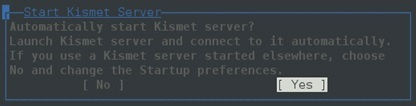
Let’s see how it works. First of all, open a terminal and type kismet. Start the Kismet Server and click Yes, as shown in the following screenshot.
Kismet
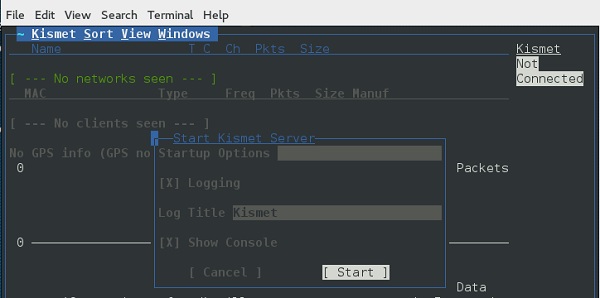
As shown here, click the Start button.
Start Button
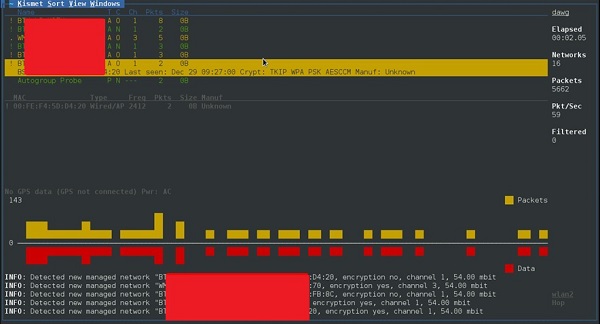
Now, Kismet will start to capture data. The following screenshot shows how it would appear −
Capture Data

NetStumbler

NetStumbler is another tool for wireless hacking that is primarily meant for Windows systems. It can be downloaded from http://www.stumbler.net/
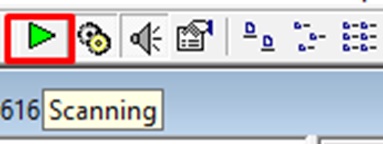
It is quite easy to use NetStumbler on your system. You just have to click the Scanning button and wait for the result, as shown in the following screenshot.
Scanning
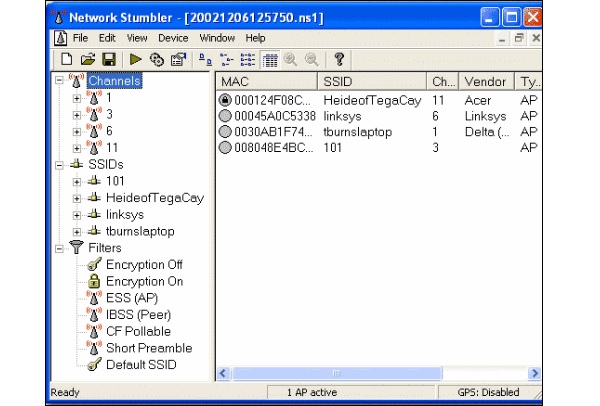
It should display a screenshot as follows −
Network Stumbler
It is important to note that your card should support monitoring mode, otherwise you will fail to monitor.

Wired Equivalent Privacy

Wired Equivalent Privacy (WEP) is a security protocol that was invented to secure wireless networks and keep them private. It utilizes encryption at the data link layer which forbids unauthorized access to the network.
The key is used to encrypt the packets before transmission begins. An integrity check mechanism checks that the packets are not altered after transmission.
Note that WEP is not entirely immune to security problems. It suffers from the following issues −
  • CRC32 is not sufficient to ensure complete cryptographic integrity of a packet.
  • It is vulnerable to dictionary attacks.
  • WEP is vulnerable to Denial of Services attacks too.

WEPcrack

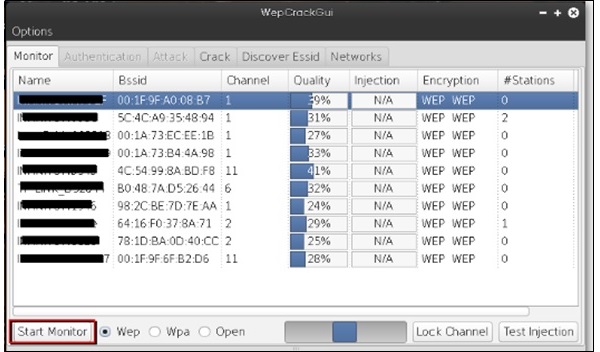
WEPcrack is a popular tool to crack WEP passwords. It can be downloaded from − https://sourceforge.net/projects/wepcrack/
WEP Crack

Aircrack-ng

Aircrak-ng is another popular tool for cracking WEP passwords. It can be found in the Kali distribution of Linux.
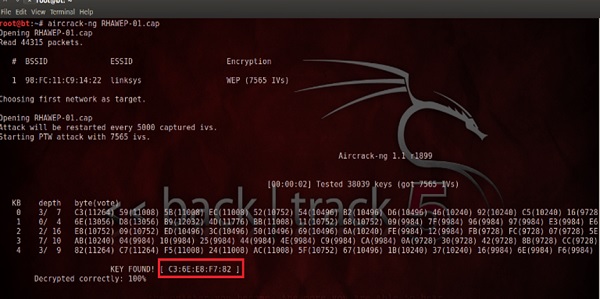
The following screenshot shows how we have sniffed a wireless network and collected packets and created a file RHAWEP-01.cap. Then we run it with aircrack-ng to decrypt the cypher.
Air Crack

Wireless DoS Attacks

In a wireless environment, an attacker can attack a network from a distance and therefore, it is sometimes difficult to collect evidences against the attacker.
The first type of DoS is Physical Attack. This type of attack is very basic and it is in the base of radio interferences which can be created even from cordless phones that operate in 2.4 GHz range.
Another type is Network DoS Attack. As the Wireless Access Point creates a shared medium, it offers the possibility to flood the traffic of this medium toward the AP which will make its processing more slow toward the clients that attempt to connect. Such attacks can be created just by a ping flood DoS attack.
Pyloris is a popular DoS tool that you can download from − https://sourceforge.net/projects/pyloris/
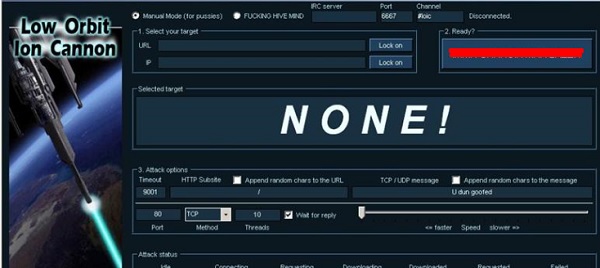
Low Orbit Ion Cannon (LOIC) is another popular tool for DoS attacks.
DOS Attacks

Quick Tips

To secure a wireless network, you should keep the following points in mind −
  • Change the SSID and the network password regularly.
  • Change the default password of access points.
  • Don’t use WEP encryption.
  • Turn off guest networking.
  • Update the firmware of your wireless device.

Ethical Hacking - DDOS Attacks

A Distributed Denial of Service (DDoS) attack is an attempt to make an online service or a website unavailable by overloading it with huge floods of traffic generated from multiple sources.
Unlike a Denial of Service (DoS) attack, in which one computer and one Internet connection is used to flood a targeted resource with packets, a DDoS attack uses many computers and many Internet connections, often distributed globally in what is referred to as a botnet.
A large scale volumetric DDoS attack can generate a traffic measured in tens of Gigabits (and even hundreds of Gigabits) per second. We are sure your normal network will not be able to handle such traffic.

What are Botnets?

Attackers build a network of hacked machines which are known as botnets, by spreading malicious piece of code through emails, websites, and social media. Once these computers are infected, they can be controlled remotely, without their owners' knowledge, and used like an army to launch an attack against any target.
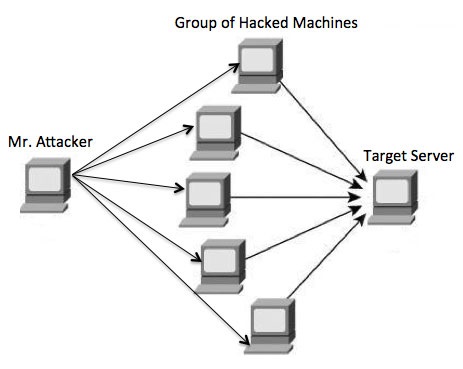
DDOS System
A DDoS flood can be generated in multiple ways. For example −
  • Botnets can be used for sending more number of connection requests than a server can handle at a time.
  • Attackers can have computers send a victim resource huge amounts of random data to use up the target's bandwidth.
Due to the distributed nature of these machines, they can be used to generate distributed high traffic which may be difficult to handle. It finally results in a complete blockage of a service.

Types of DDoS Attacks

DDoS attacks can be broadly categorized into three categories −
  • Volume-based Attacks
  • Protocol Attacks
  • Application Layer Attacks

Volume-Based Attacks

Volume-based attacks include TCP floods, UDP floods, ICMP floods, and other spoofedpacket floods. These are also called Layer 3 & 4 Attacks. Here, an attacker tries to saturate the bandwidth of the target site. The attack magnitude is measured in Bits per Second (bps).
  • UDP Flood − A UDP flood is used to flood random ports on a remote host with numerous UDP packets, more specifically port number 53. Specialized firewalls can be used to filter out or block malicious UDP packets.
  • ICMP Flood − This is similar to UDP flood and used to flood a remote host with numerous ICMP Echo Requests. This type of attack can consume both outgoing and incoming bandwidth and a high volume of ping requests will result in overall system slowdown.
  • HTTP Flood − The attacker sends HTTP GET and POST requests to a targeted web server in a large volume which cannot be handled by the server and leads to denial of additional connections from legitimate clients.
  • Amplification Attack − The attacker makes a request that generates a large response which includes DNS requests for large TXT records and HTTP GET requests for large files like images, PDFs, or any other data files.

Protocol Attacks

Protocol attacks include SYN floods, Ping of Death, fragmented packet attacks, Smurf DDoS, etc. This type of attack consumes actual server resources and other resources like firewalls and load balancers. The attack magnitude is measured in Packets per Second.
  • DNS Flood − DNS floods are used for attacking both the infrastructure and a DNS application to overwhelm a target system and consume all its available network bandwidth.
  • SYN Flood − The attacker sends TCP connection requests faster than the targeted machine can process them, causing network saturation. Administrators can tweak TCP stacks to mitigate the effect of SYN floods. To reduce the effect of SYN floods, you can reduce the timeout until a stack frees memory allocated to a connection, or selectively dropping incoming connections using a firewall or iptables.
  • Ping of Death − The attacker sends malformed or oversized packets using a simple ping command. IP allows sending 65,535 bytes packets but sending a ping packet larger than 65,535 bytes violates the Internet Protocol and could cause memory overflow on the target system and finally crash the system. To avoid Ping of Death attacks and its variants, many sites block ICMP ping messages altogether at their firewalls.

Application Layer Attacks

Application Layer Attacks include Slowloris, Zero-day DDoS attacks, DDoS attacks that target Apache, Windows or OpenBSD vulnerabilities and more. Here the goal is to crash the web server. The attack magnitude is measured in Requests per Second.
  • Application Attack − This is also called Layer 7 Attack, where the attacker makes excessive log-in, database-lookup, or search requests to overload the application. It is really difficult to detect Layer 7 attacks because they resemble legitimate website traffic.
  • Slowloris − The attacker sends huge number of HTTP headers to a targeted web server, but never completes a request. The targeted server keeps each of these false connections open and eventually overflows the maximum concurrent connection pool, and leads to denial of additional connections from legitimate clients.
  • NTP Amplification − The attacker exploits publically-accessible Network Time Protocol (NTP) servers to overwhelm the targeted server with User Datagram Protocol (UDP) traffic.
  • Zero-day DDoS Attacks − A zero-day vulnerability is a system or application flaw previously unknown to the vendor, and has not been fixed or patched. These are new type of attacks coming into existence day by day, for example, exploiting vulnerabilities for which no patch has yet been released.

How to Fix a DDoS Attack

There are quite a few DDoS protection options which you can apply depending on the type of DDoS attack.
Your DDoS protection starts from identifying and closing all the possible OS and application level vulnerabilities in your system, closing all the possible ports, removing unnecessary access from the system and hiding your server behind a proxy or CDN system.
If you see a low magnitude of the DDoS, then you can find many firewall-based solutions which can help you in filtering out DDoS based traffic. But if you have high volume of DDoS attack like in gigabits or even more, then you should take the help of a DDoS protection service provider that offers a more holistic, proactive and genuine approach.
You must be careful while approaching and selecting a DDoS protection service provider. There are number of service providers who want to take advantage of your situation. If you inform them that you are under DDoS attack, then they will start offering you a variety of services at unreasonably high costs.
We can suggest you a simple and working solution which starts with a search for a good DNS solution provider who is flexible enough to configure A and CNAME records for your website. Second, you will need a good CDN provider that can handle big DDoS traffic and provide you DDoS protection service as a part of their CDN package.
Assume your server IP address is AAA.BBB.CCC.DDD. Then you should do the following DNS configuration −
  • Create a A Record in DNS zone file as shown below with a DNS identifier, for example, ARECORDID and keep it secret from the outside world.
  • Now ask your CDN provider to link the created DNS identifier with a URL, something like cdn.someotherid.domain.com.
  • You will use the CDN URL cdn.someotherid.domain.com to create two CNAME records, the first one to point to www and the second record to point to @ as shown below.
You can take the help from your system administrator to understand these points and configure your DNS and CDN appropriately. Finally, you will have the following configuration at your DNS.
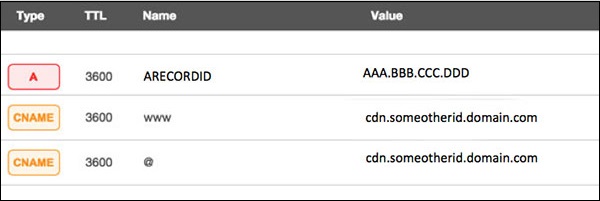
DNS Configuration
Now, let the CDN provider handle all type of DDoS attacks and your system will remain safe. But here the condition is that you should not disclose your system's IP address or A record identifier to anyone; else direct attacks will start again.

Quick Fix

DDoS attacks have become more common than ever before, and unfortunately, there is no quick fix for this problem. However, if your system is under a DDoS attack, then don’t panic and start looking into the matter step by step.

Ethical Hacking - Process

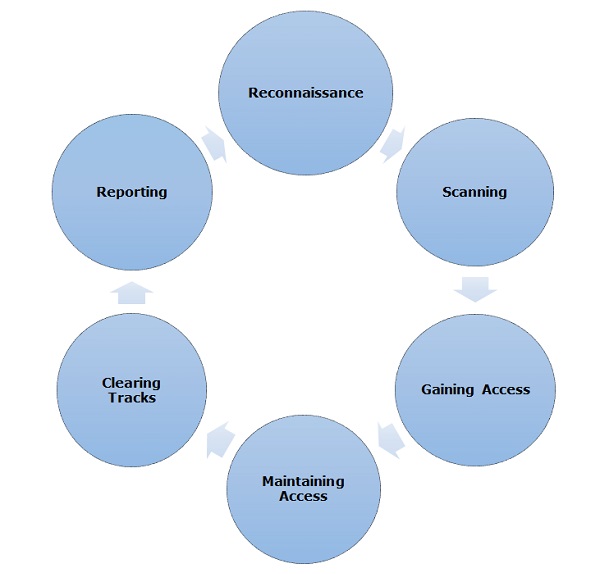
Like all good projects, ethical hacking too has a set of distinct phases. It helps hackers to make a structured ethical hacking attack.
Different security training manuals explain the process of ethical hacking in different ways, but for me as a Certified Ethical Hacker, the entire process can be categorized into the following six phases.
Ethical Hacking Process

Reconnaissance

Reconnaissance is the phase where the attacker gathers information about a target using active or passive means. The tools that are widely used in this process are NMAP, Hping, Maltego, and Google Dorks.

Scanning

In this process, the attacker begins to actively probe a target machine or network for vulnerabilities that can be exploited. The tools used in this process are Nessus, Nexpose, and NMAP.

Gaining Access

In this process, the vulnerability is located and you attempt to exploit it in order to enter into the system. The primary tool that is used in this process is Metasploit.

Maintaining Access

It is the process where the hacker has already gained access into a system. After gaining access, the hacker installs some backdoors in order to enter into the system when he needs access in this owned system in future. Metasploit is the preferred tool in this process.

Clearing Tracks

This process is actually an unethical activity. It has to do with the deletion of logs of all the activities that take place during the hacking process.

Reporting

Reporting is the last step of finishing the ethical hacking process. Here the Ethical Hacker compiles a report with his findings and the job that was done such as the tools used, the success rate, vulnerabilities found, and the exploit processes.

Quick Tip

The processes are not standard. You can adopt a set of different processes and tools according to your techniques that you are comfortable with. The process is of least significance as long as you are able to get the desired results.